 ×
×

Ask any transporter how they find drivers, and the answer is almost always the same: word of mouth, a phone call to someone who knows someone, or a broker who takes a cut on both ends. Ask a truck driver how he found his last job, and you'll get a similar story. A contact from his home district. A reference from a fellow driver at a dhaba somewhere on NH-44. Maybe a contractor who calls whenever there's a load that needs moving.
This is how India's trucking sector largely operates, even today. Not through organised systems, but through networks of personal relationships, informal middlemen, and a lot of trust built up over years of working together. That's not a criticism. In many ways, it has kept the industry running. But it also means the sector is fragmented in ways that create very real problems for everyone involved.
India's road freight network moves goods across every corner of the country. It employs millions of drivers, supports hundreds of thousands of small transporters, and keeps supply chains running for industries ranging from agriculture to automobiles. But the people and businesses that make this possible rarely operate from a shared platform or a common system.
Drivers sit at the centre of this entire operation. Without them, no truck moves, no freight reaches its destination, and no transporter earns a rupee. Yet drivers are often the least visible participants in the industry. They don't have professional profiles. Their experience isn't documented anywhere a transporter can easily check. Their availability is known only to the handful of people they happen to call. Most of the challenges the industry deals with, driver shortages, slow hiring, high turnover, verification failures, trace back directly to this. Drivers exist in the system, but the system has no real way to see them.
Transporters looking for qualified drivers often have no way to verify background or experience before hiring. Fleet owners managing dozens of trucks struggle to find trained talent without going through costly intermediaries. Logistics companies coordinating long-haul movements often lack visibility into driver availability at the other end.
Small operators, especially those running five trucks or fewer, feel this the most. They don't have HR teams or recruitment budgets. They rely entirely on personal networks, which means they're only ever as connected as the people they already know.
The consequences are practical, not just theoretical.
A transporter in Ludhiana needs a driver experienced with refrigerated cargo for a route to Bengaluru. He spends three days making calls, going through two brokers, and ends up hiring someone he's never worked with before, with no way to confirm the experience claimed. The truck sits idle for those three days. The client is unhappy. The cost of that downtime comes straight out of margin.
On the other side, a driver in Varanasi with eight years of long-haul experience finishes a job and has no work for two weeks. He's not untrained or unreliable. He's simply invisible to the transporters who need exactly his skills. He ends up taking a lower-paying short-haul job through a local contact just to stay earning.
This mismatch plays out constantly across the industry. Drivers sit without work while transporters struggle to fill positions. Trucks stay parked longer than they need to. Hiring happens slowly because verification is hard. And because brokers and middlemen hold most of the connection power, they capture value that could otherwise stay with the driver or the operator.
Credential verification is another sore point. A transporter has no easy way to check whether a driver's licence is valid, whether the experience claimed matches reality, or whether there are safety concerns from past employment. So most hiring relies on gut feel and references, which works reasonably well within a known circle but breaks down the moment you try to expand.
A unified trucking ecosystem platform doesn't solve these problems by adding technology for its own sake. It solves them by putting the right information in front of the right people at the right time.
Imagine a driver completing a job in Chennai and immediately being able to see opportunities heading toward his home district in Bihar. Or a transporter in Pune searching for heavy-vehicle drivers with crane experience and getting verified profiles rather than unconfirmed leads. Or a fleet owner reviewing a driver's employment history, licence validity, and safety record before making a single call.
The core value is connection, across stakeholders who currently operate in separate worlds. Drivers, transporters, fleet owners, logistics companies, and service providers all belong on the same platform because their needs are interlinked. A job posting only makes sense if drivers can see it. A driver profile only has value if transporters can find it.
Digital profiles change the dynamic. When a driver's experience, licence details, and past employment are recorded and verifiable, it reduces the information gap that currently forces both sides to rely on brokers. When an opportunity is listed with clear requirements and location details, drivers can make informed decisions rather than taking whatever comes through the phone.
This kind of transparency builds trust over time. Transporters who have hired well through a platform come back. Drivers who found reliable work through it return when their next job ends. The platform becomes something the industry depends on, rather than just uses occasionally.
A trucking ecosystem platform needs to do more than connect job postings to available drivers. The bigger value lies in making hiring more structured, transparent, and trustworthy for everyone involved.
Driver background verification is one piece of this. Right now, a transporter hiring someone new is largely taking their word for their experience and track record. A platform that supports verified digital profiles, where a driver's licence, employment history, and training certificates are confirmed rather than self-reported, changes what hiring actually means. The transporter makes a more informed decision. The driver with a genuine track record gets a real advantage over someone whose credentials don't hold up.
For drivers, a verified professional profile is something they can build over a career. It records where they've worked, what they've carried, how long they've held their licence, and what training they've completed. That kind of documented professional identity creates better opportunities, stronger bargaining power, and more reason to invest in their own skills.
Employer credibility matters too. Drivers who know which transporters pay on time, treat crews fairly, and provide decent working conditions make better employment decisions. A platform where that kind of information flows both ways creates accountability on both sides of the relationship.
Long-term, what the industry needs is not just faster job matching but stronger professional standards, for drivers and for the businesses that hire them.
India's trucking sector is becoming more connected and technology-enabled, somewhat slowly but steadily. A driver in his thirties today is far more likely to use a smartphone to manage his work than his counterpart was ten years ago. Younger fleet operators are tracking vehicles, managing payments, and handling documentation through apps rather than paper. The appetite for connected tools is there, even if adoption is uneven across regions and operator sizes.
The industry doesn't need to change overnight for an ecosystem platform to become useful. It needs enough participants, on enough sides of the equation, to find it more reliable than the alternatives they're already using.
A platform that earns genuine trust will become a tool the industry reaches for by habit, not one it uses reluctantly.
TruckMitr is building toward this kind of connected ecosystem by focusing on what the industry actually needs, starting with drivers. On TruckMitr, drivers build verified profiles that transporters, fleet owners, and logistics companies can actually review before making contact. Background verification sits at the centre of how hiring works on the platform, so both sides go into a new working relationship with more information than a phone call and a reference typically provides. The aim is to make direct connections between drivers and employers the norm, rather than something that only happens when you happen to know the right person.
India's trucking challenges won't be solved by individual stakeholders working separately. Drivers finding their own leads, transporters building their own informal networks, fleet owners relying on brokers: each of these works to a point, but none of it adds up to a sector that functions efficiently at scale.
The industry moves freight reliably enough that the country depends on it. But the people and businesses running that freight still largely operate in the dark, disconnected from opportunities and information that should be easily accessible. A connected ecosystem, one built on verified identities, transparent hiring, and shared visibility, changes that for every stakeholder. Not just for the transporter trying to fill a seat, or the driver looking for his next job, but for everyone who depends on freight moving on time.
The infrastructure for that kind of ecosystem is beginning to take shape. The sooner the industry connects itself around a shared ecosystem, the easier it becomes for opportunities, information, and trust to move as efficiently as the freight itself.

Elevating The Indian Trucking Ecosystem
Read More
How To Collaborate With Us And A List Of All Services We Cater To
Read More
Driving India Forward How Truck Drivers Power the Economy
Read More
From Rugged Beginnings to Digital Frontiers The Tata Motors Legacy in Indian Trucking
Read More
On-the-Go Repairs and Mobile Truck Maintenance Services in India
Read More
Safer Roads Ahead The Transformation of India’s Trucking Industry
Read More
The Future of Truck Driving A Road to Opportunity
Read More
How Electric Trucks Can Power Up Your Business A Look at the Benefits
Read More
Top 10 Health Tips for Long-Haul Truck Drivers
Read More
Tata Motors Gears Up for Digital Transformation with Fleet Verse
Read More
Tata Motors Reports Strong Sales Performance in May 2024
Read More
The Importance of Mental Health for Truck Drivers A Critical Look
Read More
The Rising Role of Women in Truck Driving in India
Read More
Emergency Preparedness for Truck Drivers
Read More
Adapting to Changing Weather Patterns: Challenges for Indian Trucking
Read More
Revolutionizing Trucking with Blockchain
Read More
Truck Customisation Trends: Merging Functionality with Personal Style
Read More
Celebrating Festivals on the Road: How Truckers Stay Connected to Home
Read More
Rural Empowerment Through Better Trucking Networks
Read More
Health on the Go: Wellness Solutions for Long-Haul Drivers
Read More
How Trucking Keeps India’s Small Businesses Moving Forward
Read More
The Influence of Bollywood on Indian Trucking Culture
Read More
Youth and Trucking: Inspiring the Next Generation of Drivers
Read More
Innovative Truck Financing Options: Making Ownership Accessible
Read More
The Role of AI in Streamlining Fleet Management
Read More
Trucking Beyond Cargo: Supporting Disaster Relief and Humanitarian Efforts
Read More
Life on the Highways: Stories of Resilience from Indian Truck Drivers
Read More
10 Summer Maintenance Tips to Keep Your Truck Running Smoothly
Read More
The Importance of Regular Tyre Checks for Safety and Fuel Efficiency
Read More
Common Truck Breakdowns and How to Prevent Them
Read More
Understanding Truck Warning Lights: What They Mean
Read More
Future of Trucking in India: Trends to Watch in 2025 & Beyond
Read More
How to Prepare Your Truck for the Monsoon Season?
Read More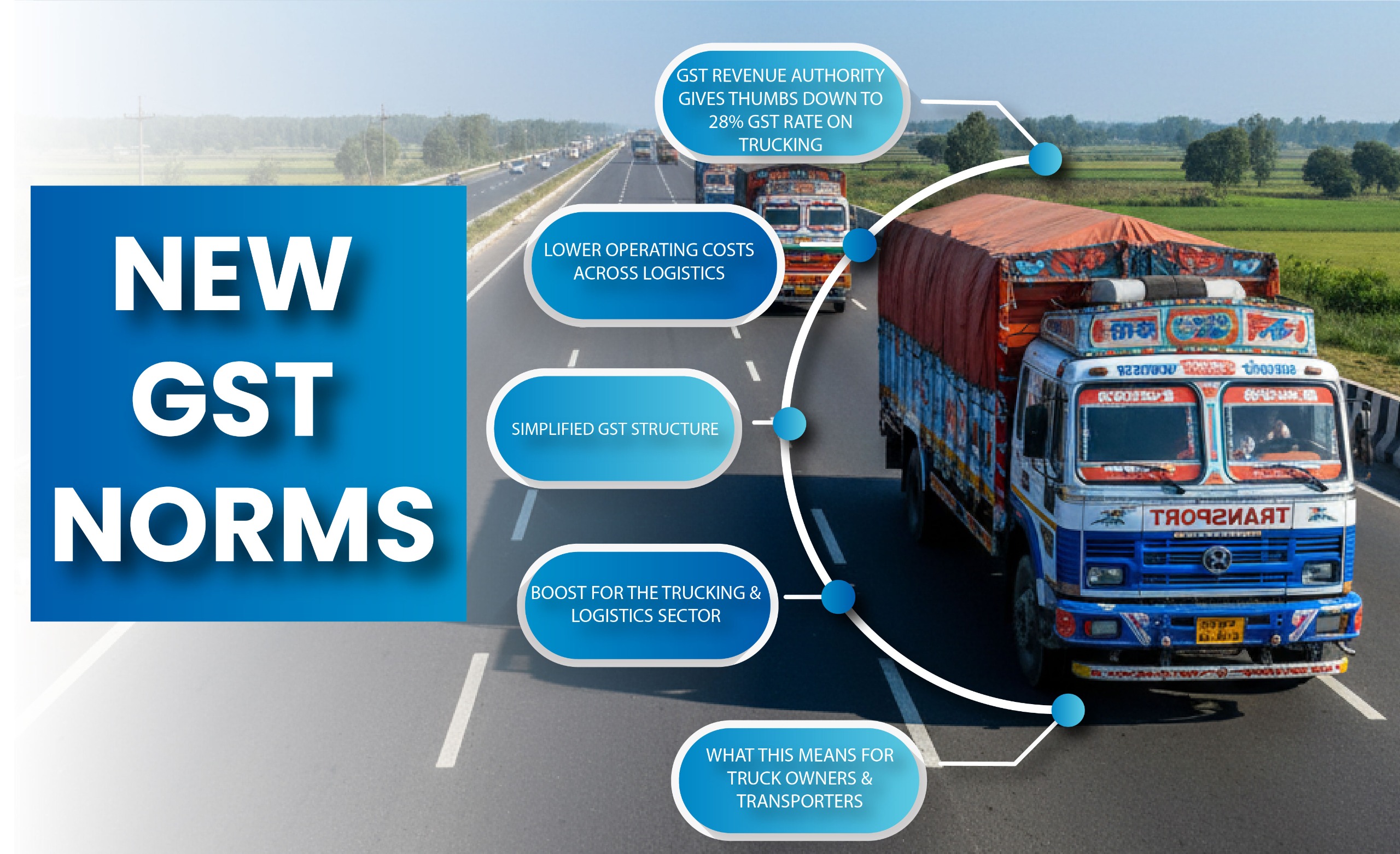
GST Reforms 2025
Read More
10 Smart Fuel-Saving Tips for Everyday Trucking
Read More
Why Preventive Maintenance Saves Money
Read More
Driving Tips for Highway Safety
Read More
Common Truck Maintenance Mistakes
Read More
Importance Of Good Sleep
Read More
LNG Trucks and LNG Stations in India
Read More
Driving a Greener Future
Read More
Future Projections of Driving Training Schools in India’s Growing Trucking Industry
Read More
Impact of AI on the Trucking Industry
Read More
India’s Growing Truck Driver Shortage
Read More
Practical Tips to Maintain Comfort Inside the Truck Cabin
Read More
Managing Stress During Traffic and Route Delays
Read More
Typical End-of-Day Practices After Completing a Driving Shift
Read More
Common Causes of Tiredness During Long Driving Hours
Read More
A New Chapter in India’s Transport and Logistics Story
Read More
Impact of AI on Career Growth of Truck Drivers
Read More
Early Signs of Fatigue Drivers Commonly Experience on the Road
Read More
Common Learnings for First-Time Truck Owners
Read More
Why Verified Truck Driver Hiring is Important for Fleet Owners
Read More
The Future of Digital Trucking Ecosystems in India
Read More
Essential Skills Every Modern Truck Driver Should Learn
Read More
Top Reasons Transporters Should Digitize Driver Recruitment
Read More
How Digital Platforms are Reducing Dependence on Trucking Brokers
Read More
How to Hire Reliable Truck Drivers for Your Fleet
Read More
Why India Needs a Unified Trucking Ecosystem Platform
Read More
How to Build Trust Between Transporters and Truck Drivers
Read More
How Driver Lifecycle Management Reduces Operational Burden for Fleet Companies
Read More
Why Corporate Fleets Need Managed Driver Staffing Solutions
Read More